Another chance to see our November talk where Dr Steven Shuttleworth asks who were 'the gentry' and talks about the huge variations in their wealth, land ownership, and their role in society; the debate about the 'rise and fall' ir the gentry in general; what we know (or think we know) about the Lancashire gentry; and then consider how these issues are reflected in the story of his ancestors, the Shuttleworths of Asterley, near Whalley.

Another chance to see this lecture, recorded and shared by Zoom on Wednesday 19 November 2025,

LECTURER: Dr Steven Shuttleworth

Steven is a native of Oldham. An environmental scientist/town planner by profession, his final post was as Director of Environment/Head of Planning for a local authority.  Since retiring, Steven has spent some of his time researching his family history, which has rekindled his long standing interest in the socioeconomic history of Lancashire. His talk asks who were ‘the gentry’. He talks about the huge variations in their wealth, land ownership, and their role in society; the debate about the ‘rise and fall’ ir the gentry in general; what we know (or think we know) about the Lancashire gentry; and then considers how these issues are reflected in the story of his ancestors, the Shuttleworths of Asterley, near Whalley.


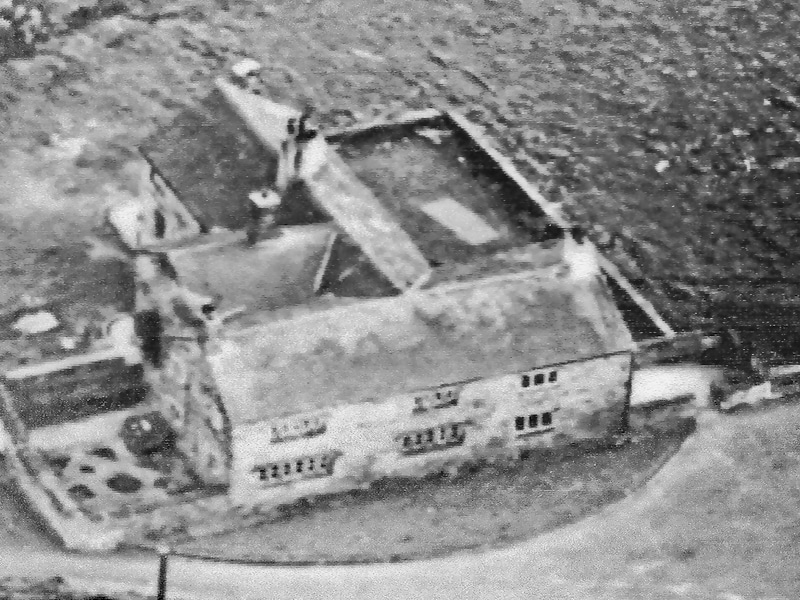
[Image: Easterley Farm, formerly known as Asterley, in the 1950s]

Back

Another chance to see our October 2025 lecture where Professor Katrina Navickas examines the rise of the footpath and commons preservation movement, and some of the early contests between walkers and landowners, culminating in the famous Winter Hill dispute in 1896, and lesser well known conflicts in Darwen and other parts of the southern Pennines.

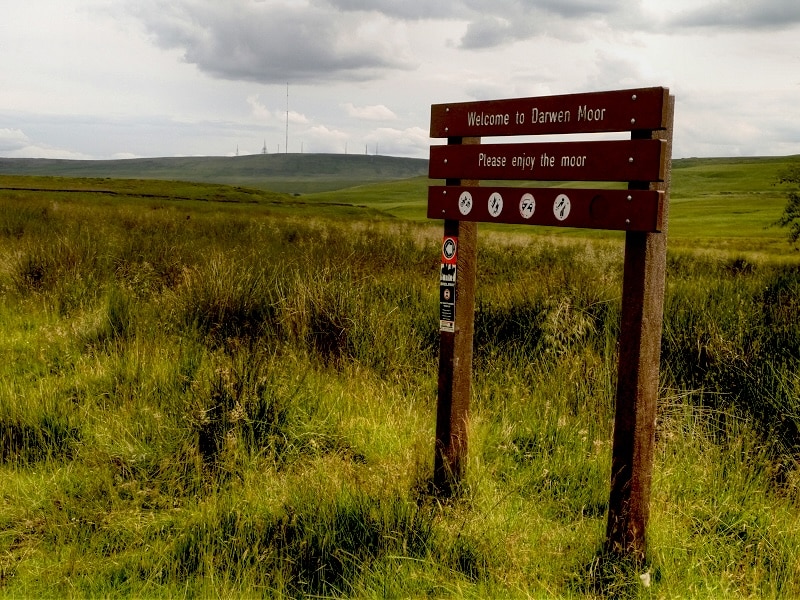
Another chance to see our October 2025 lecture. Drawing from her new book, Contested Commons: a history of protest and public space in England, Professor Katrina Navickas (University of Hertfordshire) examines the rise of the footpath and commons preservation movement, and some of the early contests between walkers and landowners, culminating in the famous Winter Hill dispute in 1896, and lesser well known conflicts in Darwen and other parts of the southern Pennines. It argues that the mass trespasses in the 1890s were as, if not more, important than the Kinder Scout mass trespass of the 1930s.[Image: Darwen Moor and Winter Hill (c) David Dixon, CC BY-SAY 2]

Back

Another chance to see our June 2025 lecture. Against a backdrop of ever-increasing social malaise and ongoing private sector inertia, Liverpool Corporation embarked upon an energetic programme of slum clearance and concomitant working-class housing construction. Such was its success that by 1914 it was, with the sole exception of the London County Council, the largest single provider of municipal social housing in country. This talk will provide an overview of both the changing nature of policy and the individual developments constructed by Liverpool Corporation in the pre-WWI period.

This lecture took place via Zoom on Wednesday 18 June 2025

Speaker: Dr Bertie Dockerill, editor of the Society’s journal, Transactions, and lecturer in Planning History.

The global-first of municipally-constructed social housing occurred within Liverpool with the opening of St Martin’s Cottages in 1869. Though specifically built as a singular experiment for the private sector to emulate there was, in the years that followed, a total failure of the same to construct equivalent housing for the city’s working-classes. Against a backdrop of ever-increasing social malaise and ongoing private sector inertia, the Corporation subsequently embarked upon an energetic programme of slum clearance and concomitant working-class housing construction. Such was its success that by 1914 it was, with the sole exception of the London County Council, the largest single provider of municipal social housing in country. This talk will provide an overview of both the changing nature of policy and the individual developments constructed by Liverpool Corporation in the pre-WWI period.

Back

Green belts have been part of the UK planning system for more than 70 years, and are perhaps unique as an example of a social policy which is largely unchanged over that period. In this lecture - preceded by the Society's AGM - Professor John Sturzaker will explore the origins of green belts in the UK, and on Merseyside, trace their influence since their introduction, and consider how they might (need to) change in the future.

The Society’s AGM will be held in person at the Liverpool Athenaeum (Library Reading Room) on Wednesday 19 March, 2-4pm. 

It will be followed at approximately 3pm by our March 2025  lecture given by Professor John Sturzaker FRTPI, Ebenezer Howard Professor of Planning at the University of Hertfordshire.

Green belts have been part of the UK planning system for more than 70 years, and are perhaps unique as an example of a social policy which is largely unchanged over that period. This lecture will explore the origins of green belts in the UK, and on Merseyside, trace their influence since their introduction, and consider how they might (need to) change in the future. 

This lecture is free to attend and open to all. 

THE LIVERPOOL ATHENAEUM IS NOT FULLY ACCESSIBLE

Back

Another chance to see our February 2025 lecture where Professor Paul Salveson covers the historical significance of the Liverpool and Manchester railway and the events that preceded it ahead of its bicentenary in 2030 and offers a glimpse of plans for 2029 and 2030.

 Another chance to see our February 2025 lecture where Professor Paul Salveson covers the historical significance of the Liverpool and Manchester railway and the events that preceded it ahead of its bicentenary in 2030 and offers a glimpse of plans for 2029 and 2030.

Professor Salveson is chair of the Rocket 2030 Partnership which is planning the celebrations for the 200th anniversary of the Liverpool and Manchester Railway in 2030.


This lecture took place, via Zoom, on Wednesday 19 February 2025.


Back