How do histories of welfare, housing, top-down urban redevelopment and economic management look when viewed from Liverpool? Dr Sam Wetherell compares the postwar fate of various groups deemed to be “surplus” in the city in the 1930s and 1940s: white unemployed workers, West African seamen and Black and Chinese technicians and sailors recruited into the city during the war. The dramatic reorganisation of Liverpool’s economy and built environment hardened lines of racial difference in the city, with people of colour becoming unhoused, policed, confined to insecure work and, in some instances, deported.

Wednesday 11 March, 2pm [AGM followed by our March Lecture]
For those not able to attend IN PERSON, email Dr Fiona Pogson (membership@hslc.org.uk)
How do histories of welfare, housing, top-down urban redevelopment and economic management look when viewed from Liverpool? Dr Sam Wetherell (University of York) compares the postwar fate of various groups deemed to be “surplus” in the city in the 1930s and 1940s: white unemployed workers, West African seamen and Black and Chinese technicians and sailors recruited into the city during the war. Liverpool’s unemployed white population were the beneficiaries of a massive state-backed expansion of housing, and jobs. At the same time, this dramatic reorganisation of Liverpool’s economy and built environment hardened lines of racial difference in the city, with people of colour becoming unhoused, policed, confined to insecure work and, in some instances, deported.
In telling both halves of this story, Dr Wetherell seeks to situate broader arguments about decolonisation, racialisation and welfare in a single city, while offering a different explanatory framework for understanding a period of urban redevelopment, mass house-building and industrial policy.
ALL WELCOME – FREE TO ATTEND

Back

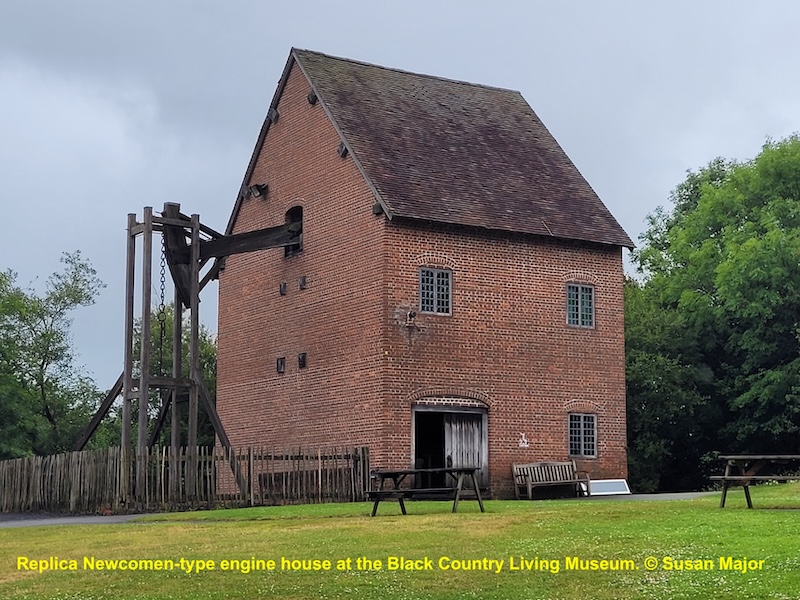
Another chance to see our February lecture: Thomas Newcomen's invention of an engine for draining mines and its first use in a coal mine in 1712, heralded the 'Industrial Revolution' in Britain. Their installation in Prescot and Whiston was at the forefront of the development of the South West Lancashire Coalfield in the eighteenth century and there is evidence that the first Newcomen-type engine in Lancashire was installed in Whiston in 1719.

Another chance to see this lecture, recorded and shared by Zoom on Wednesday 18 February 2026


Speakers: Ben Croxford is the Historic Environment Record Officer for Merseyside working for the Merseyside Environmental Advisory Service. He has previously worked as an archaeologist across the UK and on excavations in Italy and Tunisia. He is a member of the Chartered Institute for Archaeologists and the Merseyside Archaeological Society. Maurice Handley is a former Chartered Mechanical Engineer.  After retiring, he followed a number of part time courses at the University of Liverpool and was awarded a Diploma in Landscape Interpretation. He has a  long-standing interest in archaeology, geology and industrial history.

Men and Maurice made use of maps and plans, coupled with documentary evidence and recently published information about the supply of components, to reassess the location, dates of installation and ownership of Newcomen-type engines in Prescot and Whiston. 

Back

This year's volume includes six articles and six book reviews. This edition focuses mainly on Lancashire and later historical periods but offers fresh insights into a wide variety of subjects ranging from Liverpool’s ‘new’ police force to a questioning of traditional interpretations of the impact of the Lancashire Cotton Famine. While one article asks what the creation and governance of the model village, Port Sunlight, tells us about Edwardian ideals of self-improvement and welfare, a scheme for a modern garden city in Withington, Manchester did not materialise.

This volume is not available in digital form on our website at present. HSLC members receive a copy of this volume plus online access to this and other recent volumes through Liverpool University Press.

Front matter:
Editorial note
Notes on contributors

ARTICLES

‘The police of Liverpool had been a disgrace’: The ‘Old’ Constables and the ‘New Police’
Nigel Coles

Re-connecting the Classes – Establishing the Victoria Women’s Settlement in North Liverpool, 1898-1910
Roy Guard

The Impact of the Lancashire Cotton Famine on Working Families: New Evidence
Emma Kelso

Withington: Suburban Innovation
Victoria Jolley

Port Sunlight Model Village: Representative of Late Victorian and Early Edwardian Values and Ideals Regarding ‘Self-Improvement’ and Health and Welfare?
Elin Smith

Entering Hardman’s House: Exploring the Legacies of British Imperialism in the Home and Photographs of Edward Chambré Hardman
Ria Lilley

Book Reviews

Report of the Council for the Year 2024

Council and Officers for 2024

Back

Journal Search

Enter keyword(s) in the box below to search all journal PDFs.

Another chance to see our November talk where Dr Steven Shuttleworth asks who were 'the gentry' and talks about the huge variations in their wealth, land ownership, and their role in society; the debate about the 'rise and fall' ir the gentry in general; what we know (or think we know) about the Lancashire gentry; and then consider how these issues are reflected in the story of his ancestors, the Shuttleworths of Asterley, near Whalley.

Another chance to see this lecture, recorded and shared by Zoom on Wednesday 19 November 2025,

LECTURER: Dr Steven Shuttleworth

Steven is a native of Oldham. An environmental scientist/town planner by profession, his final post was as Director of Environment/Head of Planning for a local authority.  Since retiring, Steven has spent some of his time researching his family history, which has rekindled his long standing interest in the socioeconomic history of Lancashire. His talk asks who were ‘the gentry’. He talks about the huge variations in their wealth, land ownership, and their role in society; the debate about the ‘rise and fall’ ir the gentry in general; what we know (or think we know) about the Lancashire gentry; and then considers how these issues are reflected in the story of his ancestors, the Shuttleworths of Asterley, near Whalley.


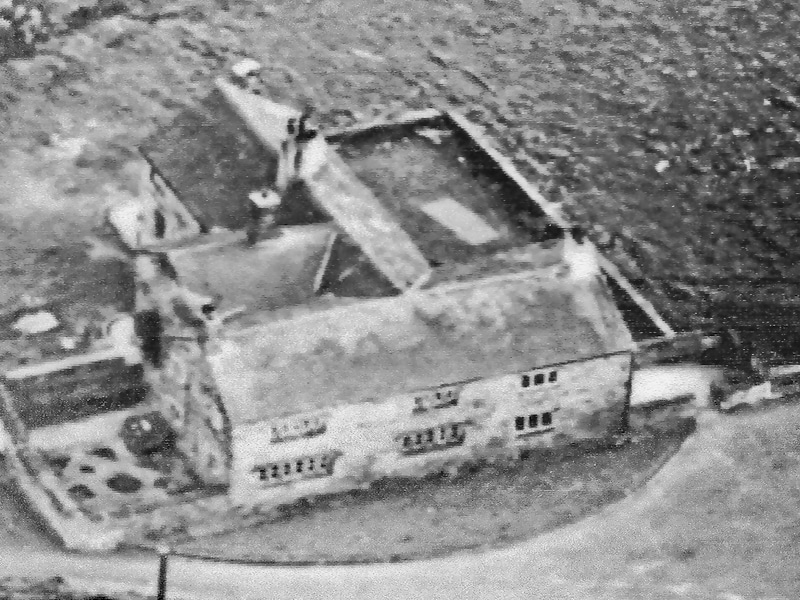
[Image: Easterley Farm, formerly known as Asterley, in the 1950s]

Back

Another chance to see our October 2025 lecture where Professor Katrina Navickas examines the rise of the footpath and commons preservation movement, and some of the early contests between walkers and landowners, culminating in the famous Winter Hill dispute in 1896, and lesser well known conflicts in Darwen and other parts of the southern Pennines.

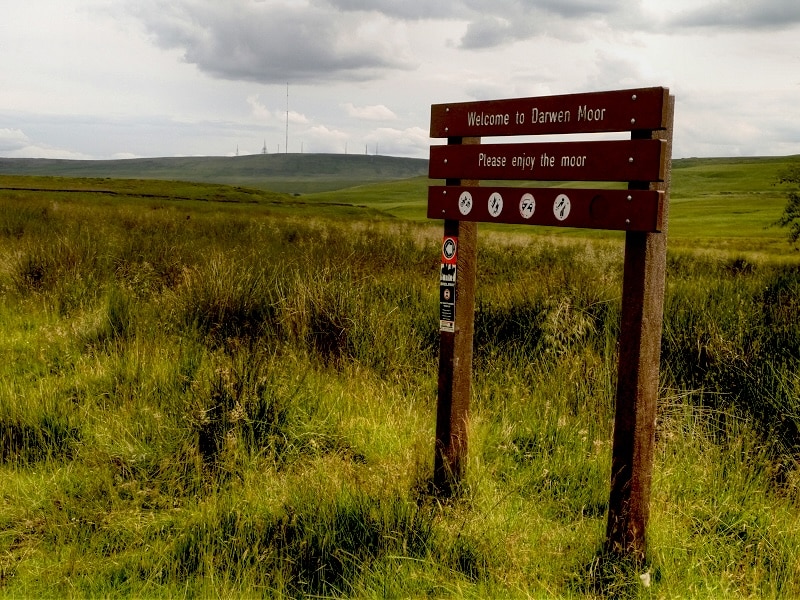
Another chance to see our October 2025 lecture. Drawing from her new book, Contested Commons: a history of protest and public space in England, Professor Katrina Navickas (University of Hertfordshire) examines the rise of the footpath and commons preservation movement, and some of the early contests between walkers and landowners, culminating in the famous Winter Hill dispute in 1896, and lesser well known conflicts in Darwen and other parts of the southern Pennines. It argues that the mass trespasses in the 1890s were as, if not more, important than the Kinder Scout mass trespass of the 1930s.[Image: Darwen Moor and Winter Hill (c) David Dixon, CC BY-SAY 2]

Back

Another chance to see our June 2025 lecture. Against a backdrop of ever-increasing social malaise and ongoing private sector inertia, Liverpool Corporation embarked upon an energetic programme of slum clearance and concomitant working-class housing construction. Such was its success that by 1914 it was, with the sole exception of the London County Council, the largest single provider of municipal social housing in country. This talk will provide an overview of both the changing nature of policy and the individual developments constructed by Liverpool Corporation in the pre-WWI period.

This lecture took place via Zoom on Wednesday 18 June 2025

Speaker: Dr Bertie Dockerill, editor of the Society’s journal, Transactions, and lecturer in Planning History.

The global-first of municipally-constructed social housing occurred within Liverpool with the opening of St Martin’s Cottages in 1869. Though specifically built as a singular experiment for the private sector to emulate there was, in the years that followed, a total failure of the same to construct equivalent housing for the city’s working-classes. Against a backdrop of ever-increasing social malaise and ongoing private sector inertia, the Corporation subsequently embarked upon an energetic programme of slum clearance and concomitant working-class housing construction. Such was its success that by 1914 it was, with the sole exception of the London County Council, the largest single provider of municipal social housing in country. This talk will provide an overview of both the changing nature of policy and the individual developments constructed by Liverpool Corporation in the pre-WWI period.

Back

Another chance to see our April 2025 lecture where Dr Lewis Darwen presents a new perspective on the 1853-1854 Preston Strike and Lockout. Previously remembered for the peaceful conduct of the operatives involved, the reality for many was far more complex.

This lecture took place via Zoom on Wednesday 23 April 2025.

Dr Lewis Darwen is a historian of nineteenth century Britain and has published widely on topics relating to poverty, welfare and social policy. He is Honorary Research Fellow at London Metropolitan University.

While this major industrial dispute has been remembered for the peaceful conduct of the operatives, placing it within the context of the ‘Age of Equipoise’, the reality for many oof those was far more complex. Beneath the surface of apparent calm, intense conflict arose between strikers and ‘knobsticks’. Seen as class traitors , ‘knobsticks’ frequently faced verbal and physical violence from their fellow operatives.

Image – A cartoon drawn during the dispute, mocking the attempt to break the strike with imported ‘knobstick’ labour (courtesy of Lancashire Archives)


Back

Green belts have been part of the UK planning system for more than 70 years, and are perhaps unique as an example of a social policy which is largely unchanged over that period. In this lecture - preceded by the Society's AGM - Professor John Sturzaker will explore the origins of green belts in the UK, and on Merseyside, trace their influence since their introduction, and consider how they might (need to) change in the future.

The Society’s AGM will be held in person at the Liverpool Athenaeum (Library Reading Room) on Wednesday 19 March, 2-4pm. 

It will be followed at approximately 3pm by our March 2025  lecture given by Professor John Sturzaker FRTPI, Ebenezer Howard Professor of Planning at the University of Hertfordshire.

Green belts have been part of the UK planning system for more than 70 years, and are perhaps unique as an example of a social policy which is largely unchanged over that period. This lecture will explore the origins of green belts in the UK, and on Merseyside, trace their influence since their introduction, and consider how they might (need to) change in the future. 

This lecture is free to attend and open to all. 

THE LIVERPOOL ATHENAEUM IS NOT FULLY ACCESSIBLE

Back

Another chance to see our February 2025 lecture where Professor Paul Salveson covers the historical significance of the Liverpool and Manchester railway and the events that preceded it ahead of its bicentenary in 2030 and offers a glimpse of plans for 2029 and 2030.

 Another chance to see our February 2025 lecture where Professor Paul Salveson covers the historical significance of the Liverpool and Manchester railway and the events that preceded it ahead of its bicentenary in 2030 and offers a glimpse of plans for 2029 and 2030.

Professor Salveson is chair of the Rocket 2030 Partnership which is planning the celebrations for the 200th anniversary of the Liverpool and Manchester Railway in 2030.


This lecture took place, via Zoom, on Wednesday 19 February 2025.


Back

Another chance to see our November 2024 lecture when Local Studies librarians from CILIP, the Chartered Institute of Library and Information Professionals, talked about their freely accessible online guide.

This lecture was  organised by CILIP’s Local Studies Group on behalf of the Historic Society of Lancashire and Cheshire

https://youtu.be/Hwrw5NXHE2I 

Heritage resources can make a difference to individuals: the young couple in their first house who visited because they had chopped down some trees which were inside their fence only to find that their neighbour claimed the land and the trees; the schoolteacher who said that her students’ A level results had improved as a result of class visits to the local studies library; the family who were helped to find essential evidence about a local company and were able to obtain compensation for the loss of a loved one.


Back